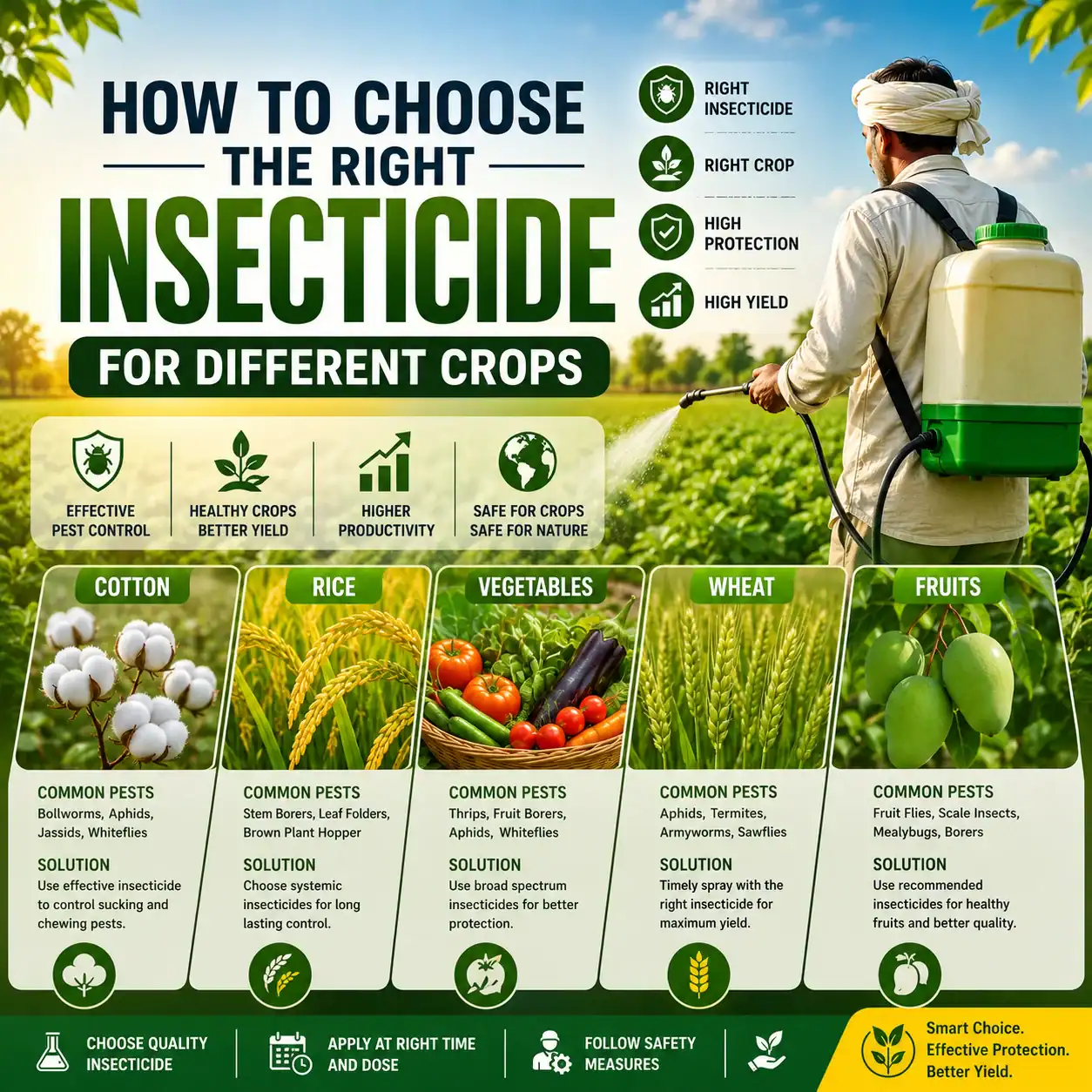




Insects are one of the biggest threats to agricultural productivity, causing significant crop losses every year. With the advancement of farming practices, modern crop protection now relies on scientifically developed insecticides to control pests effectively and safely. Understanding the types of insecticides and their role in modern crop protection helps farmers choose the right solution for healthy crops and higher yields.
What Are Insecticides?
Insecticides are chemical or biological substances used to control, repel, or eliminate harmful insects that damage crops. They play a vital role in protecting crops from pests that affect plant growth, reduce yield, and compromise crop quality. Modern insecticides are designed to be effective against target pests while minimizing impact on beneficial insects and the environment.
Major Types of Insecticides Used in Agriculture
1. Contact Insecticides
Contact insecticides kill insects when they come into direct contact with the chemical. These are commonly used to control pests present on plant surfaces such as leaves and stems. They act quickly and are effective for managing visible pest infestations.
Role in crop protection:
- Immediate pest control
- Useful for controlling surface-feeding insects
- Ideal for early-stage infestations
2. Systemic Insecticides
Systemic insecticides are absorbed by the plant and transported through its tissues. When insects feed on the treated plant, they ingest the insecticide and are controlled from within.
Role in crop protection:
- Long-lasting pest control
- Effective against sap-sucking pests like aphids and whiteflies
- Protects new plant growth
3. Stomach Poison Insecticides
These insecticides work when insects consume treated plant material. They are especially effective against chewing insects such as caterpillars and beetles.
Role in crop protection:
- Targeted control of chewing pests
- Reduced damage to leaves and fruits
- Improves crop quality and yield
4. Biological (Bio) Insecticides
Bio insecticides are derived from natural sources such as bacteria, fungi, or plant extracts. They are eco-friendly and support sustainable farming practices.
Role in crop protection:
- Environmentally safe pest management
- Preserves beneficial insects
- Suitable for organic and residue-conscious farming
5. Insect Growth Regulators (IGRs)
Insect Growth Regulators disrupt the life cycle of insects by preventing them from developing into mature adults. Instead of killing pests instantly, they reduce pest populations over time.
Role in crop protection:
- Long-term pest population control
- Reduces resistance development
- Safe for integrated pest management (IPM) programs
Importance of Insecticides in Modern Agriculture
Modern farming faces challenges such as pest resistance, climate change, and the need for higher productivity. Insecticides help farmers:
- Protect crops at critical growth stages
- Increase yield and crop quality
- Reduce post-harvest losses
- Ensure consistent food production
Advanced insecticide formulations also focus on safety, precision application, and reduced environmental impact.
Choosing the Right Insecticide
Selecting the right insecticide depends on factors such as:
- Type of crop and pest
- Stage of infestation
- Application method
- Safety and residue requirements
A trusted insecticide products manufacturer provides guidance, quality assurance, and scientifically tested solutions to help farmers make informed decisions.
Conclusion
Insecticides remain an essential tool in modern crop protection when used responsibly and correctly. Understanding the different types of insecticides—contact, systemic, stomach poison, biological, and growth regulators—helps farmers manage pests effectively while supporting sustainable agriculture. With the right insecticide solutions, farmers can protect their crops, improve productivity, and secure better returns.